

Why phrasing matters
Chief answers the question you actually asked. A vague prompt gets a vague answer; a specific one gets a focused, well-sourced reply you can act on right away. You do not need special syntax — you just need to say what you want, what to use, and what the answer should look like.
Be specific about the task
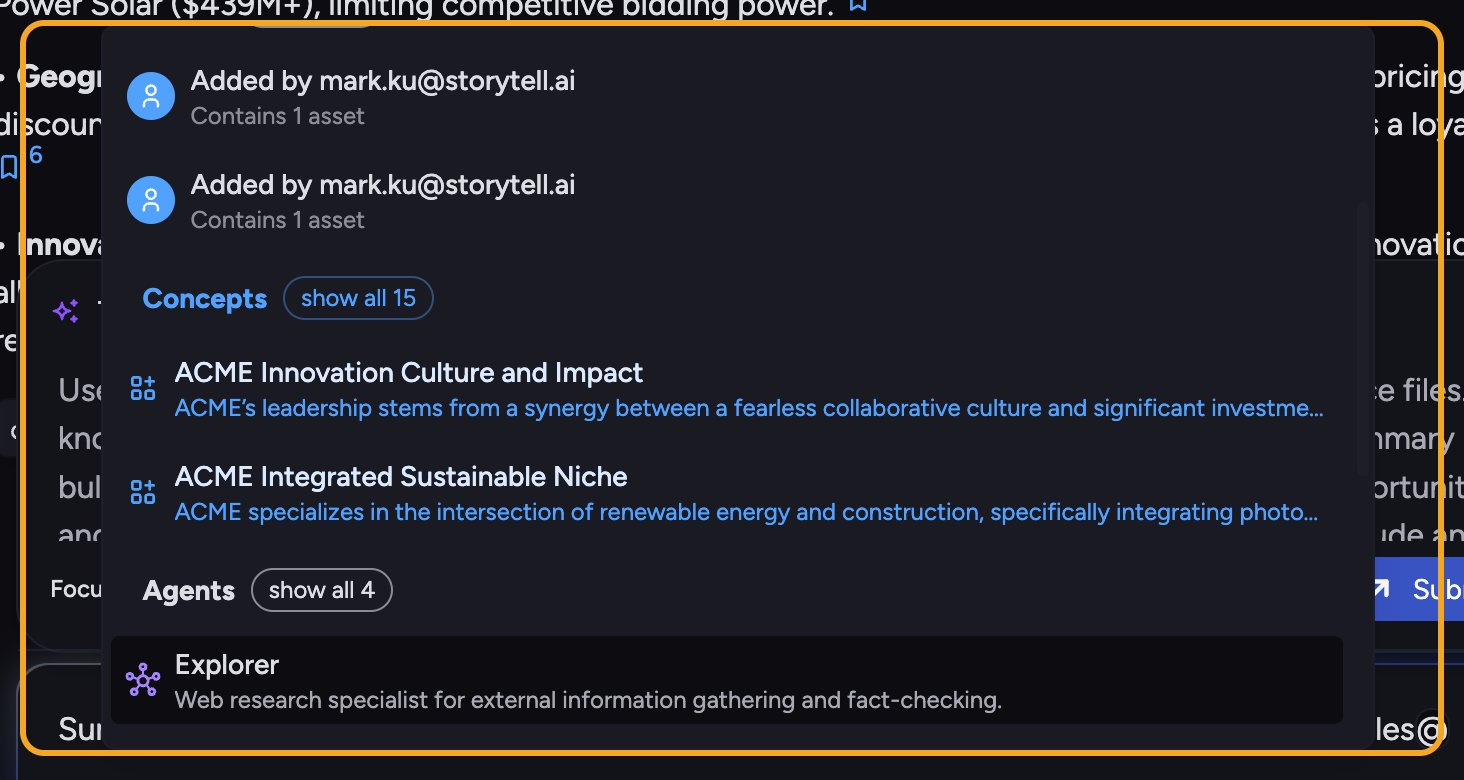
State the outcome you want, not just the topic. Chief can also suggest a sharper version of your prompt as you type. “Summarize the Q3 board deck in five bullet points for an exec audience” beats “tell me about Q3.” Name the format (bullets, table, short paragraph), the length, and the audience when they matter.Point Chief at the right sources
Give context, then ask
One strong message often works better than a stack of fragments. Tell Chief the situation, the constraint, and the goal in the same prompt: who it is for, what decision it supports, and what to leave out.Iterate instead of restarting
If the first answer is close but not right, refine it in a follow-up rather than retyping the whole question. “Make it shorter,” “focus on the risks,” or “rewrite for a non-technical reader” all build on the answer you already have, because the task keeps its context.FAQ
How long should a prompt be?
How long should a prompt be?
Long enough to be unambiguous. Include the task, the audience, the format, and any must-use sources. If a detail would change the answer, put it in the prompt.
Do I need special commands or syntax?
Do I need special commands or syntax?
No. Plain language works. The only optional helper is the @ menu in the prompt bar, which lets you attach a specific file, Concept, Skill, or Expert Voice to the prompt.
Chief misunderstood my question and answered something else. How do I fix it?
Chief misunderstood my question and answered something else. How do I fix it?
Reply in the same task to correct course — “that is not what I meant; I am asking about X.” You can also edit your original message to rephrase it, which keeps the thread focused instead of starting over.