

Why this matters
A lot of your most valuable data lives in spreadsheets — pipeline exports, financial models, survey results. But a spreadsheet isn’t prose: it’s rows, columns, and multiple sheets that only make sense as structured data. Chief handles spreadsheets on a dedicated path so it can reason over their structure rather than treating them like a wall of text. Knowing how that path works tells you when a spreadsheet answer will be reliable and how to set yourself up for accurate results.How it actually works
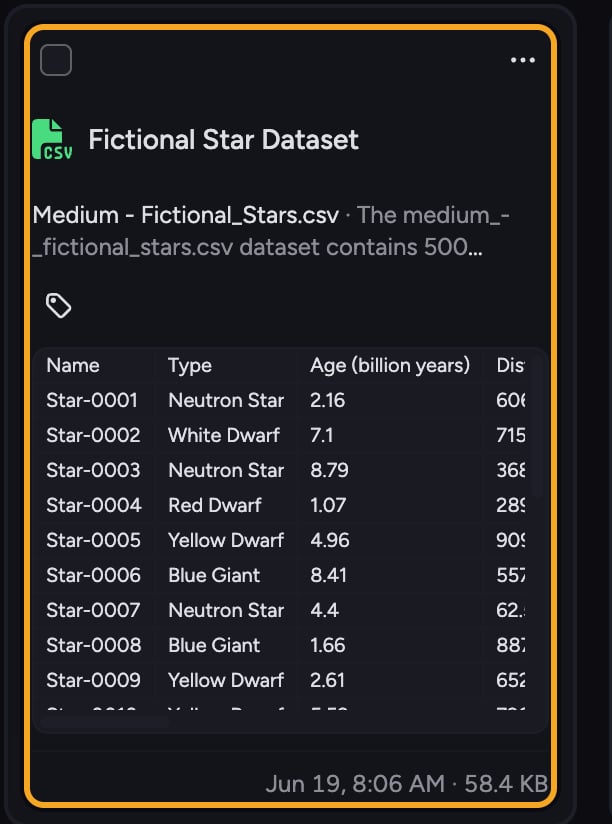
- Excel files are split by sheet. An .xls/.xlsx workbook is converted into one CSV per sheet, and each sheet is then processed independently — so a multi-tab workbook becomes several queryable tables rather than one tangled blob.
- CSV files are sampled and embedded. Chief reads the file, captures a representative sample of the data so it understands the shape and content, and indexes it so the structured data is searchable alongside the rest of your knowledge.
A worked example
FAQ
Why do I have to add spreadsheets one at a time?
Why do I have to add spreadsheets one at a time?
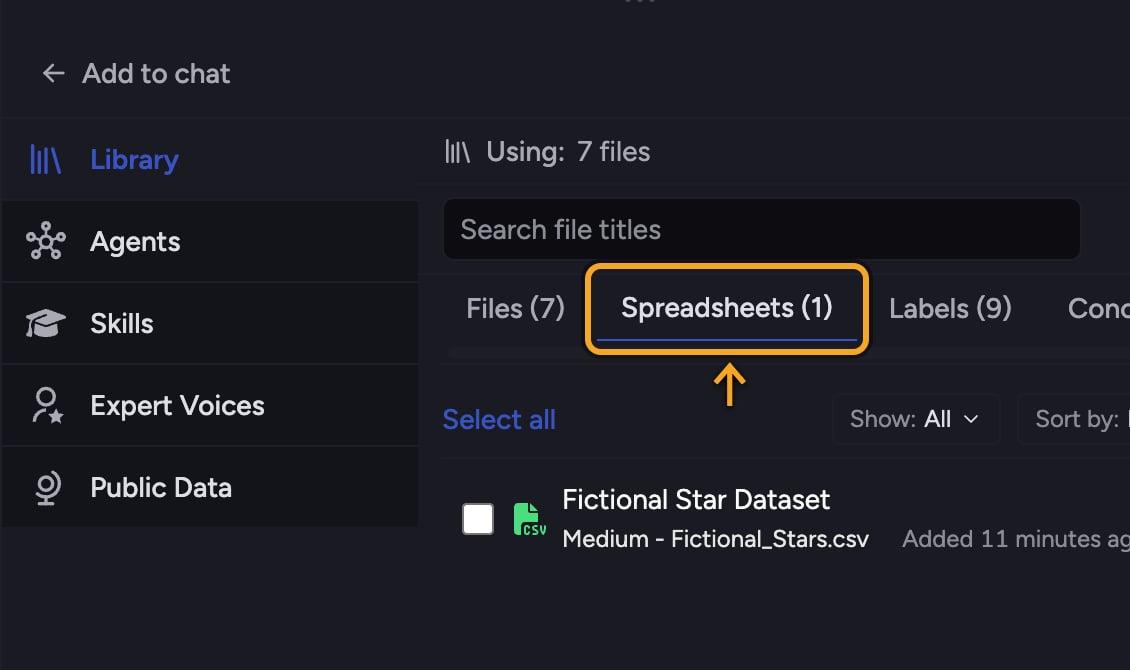
Structured files are processed and reasoned over differently from documents. Adding them individually keeps Chief focused on the exact tables you want, which produces more accurate analysis than blending them into a large pool of unstructured files.
Does Chief read every single row of a large CSV?
Does Chief read every single row of a large CSV?
Chief captures a representative sample of the data to understand its structure and content, and indexes it for search. For very large files, framing your question around specific columns, time ranges, or segments will give you the most reliable answers.