

Open the Files scope

- In the prompt bar, find the configuration chips beside the + button.
- Click Files. The scope picker shows the files and knowledge currently available to the task.
Add Files, Labels, Collections, or Concepts
- Click the + button at the left of the action bar. The command menu opens.
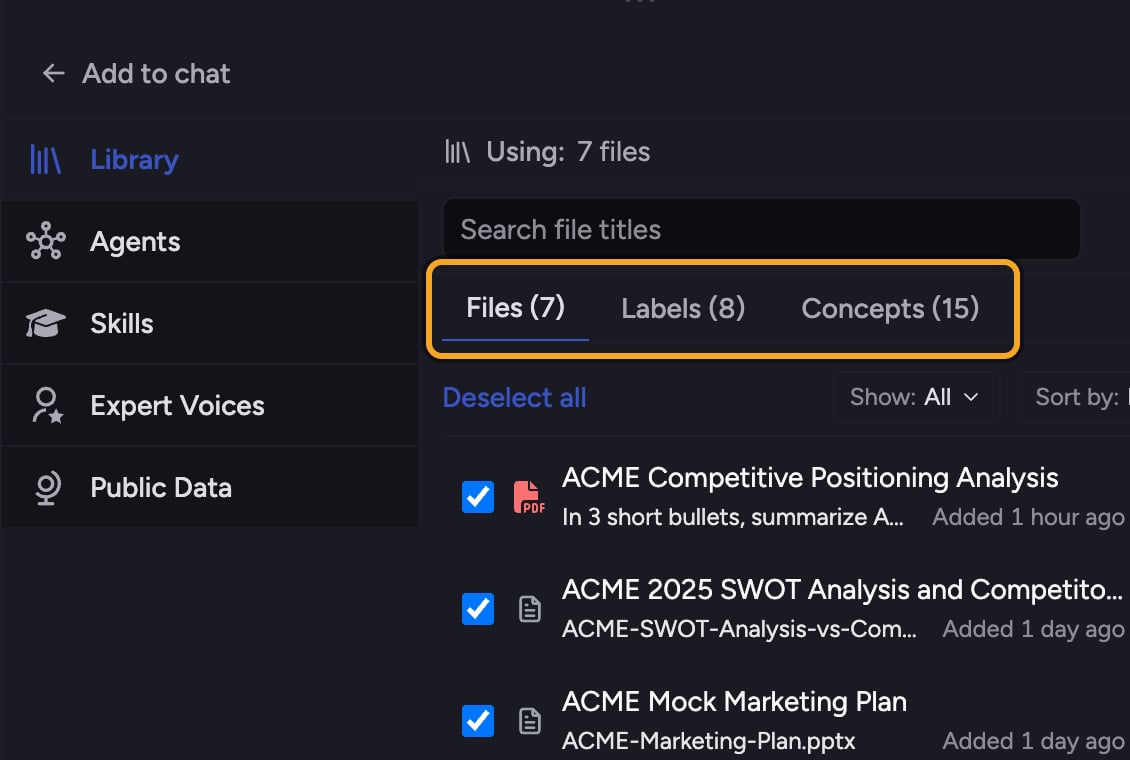
- Choose Add from Library. A picker opens with tabs for library items, Labels, Collections, and Concepts.
- Select the items you want. Each selection is added to the task’s scope and summarized by the Files chip.
- Type your prompt and send. Chief answers using exactly what is in scope.
Good to know: Add Labels — several at once — or Collections instead of picking files one by one. A Label or Collection brings in every file it covers, and stays current as files move in and out of it.
Use your whole Library, or none of it
When the Files chip shows the Library icon, Chief is drawing on every eligible file in the Project. When no files are selected, Chief answers from the prompt and any Public Data only.Clear the scope
- Open the Files chip.
- Clear the selected Files and knowledge. The chip returns to its unset Files label.
FAQ
What's the difference between scope and @-mentioning?
What's the difference between scope and @-mentioning?
Scope set through the Files chip is standing context for the task. An @-mention pulls a specific item into one prompt inline. Both feed the same answer because mentions merge into scope when you send.
I added files but the answer ignored them.
I added files but the answer ignored them.
Check that the files finished processing. A spinner on the Files chip means work is still pending. Also confirm the expected files remain selected; see Chief can’t see or isn’t using my document if it persists.
Why does my file count look lower than the number of files I added?
Why does my file count look lower than the number of files I added?
Spreadsheets are counted separately and shown as their own count. The file count covers your other documents; the spreadsheet count is listed beside it.